

Nothing beats the excitement of an empty backpack and a garage full of gear. That moment marks the start of any adventure, and how you load that bag has everything to do with how it plays out. I’ve packed more bags than I care to admit, often for trips I never took, so I know the temptation of overthinking it. In this article, I’ll show you how to build the perfect outdoor adventure kit. We’ll talk about how to pick the right gear, decide what to leave behind, and make your bag the kind of reliable companion you never want to leave at home. Let’s get started.
What an Outdoor Adventure Kit Is and Isn’t
An outdoor adventure kit is lean, optimized, and has what you truly need to be safe and efficient on your trip. It’s not a bug-out bag or a get-home bag packed for every possible scenario. Those have their place, but that’s a story for another day.
The Bag
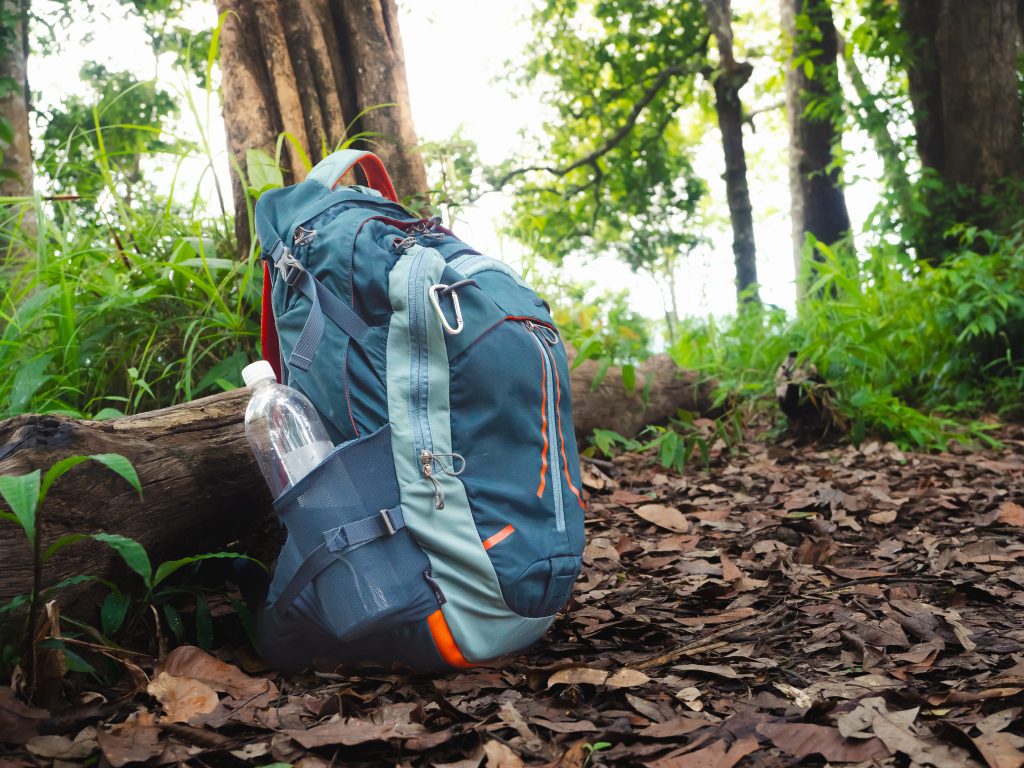
Your pack is the foundation of your kit. It could be a military surplus haversack or a sleek ultralight daypack. What matters is that it carries your gear comfortably and securely. My main advice is simple: don’t trust hype about what’s "best." Backs and shoulders vary. Go try on a few packs and find what fits. Personally, I rely on my old 5.11 Rush 12, but choose what works for you.
Basic Principles
Before you start packing, familiarize yourself with these words to live by:
Carry what you need, need what you carry. (Common bushcraft saying)
Don’t carry a fish scaler because you might catch a fish, but do carry water because you absolutely will need it.
The more you know, the less you carry. (Mors Kochanski)
Skill replaces gear. A bandana and a good knot can serve as a tourniquet. Knife skills can replace a fish scaler. Practice and knowledge lighten your load.
You don’t need a full pack to have everything you need. (My Scoutmaster)
Don’t fill space just because you can. Keep extra room for trip-specific gear. Don’t carry something just because there’s space.
Ounces equal pounds, and pounds equal pain. (Common military saying)
When you’re hiking all day, every ounce adds up. Be especially wary of metal tools; they get heavy fast. Looking at you, fish scaler.
No unitaskers in my kitchen! (Alton Brown)
Although your adventure isn’t in a kitchen, the principle still applies. Don’t bring single-use gear when a multitasker can do the job just as well. You can scale a fish with a knife, so leave the scaler home.
Don’t Carry a Fish Scaler. (George Muhlestein)
I shouldn’t need to explain this one.
The Essential Gear List
A Knife
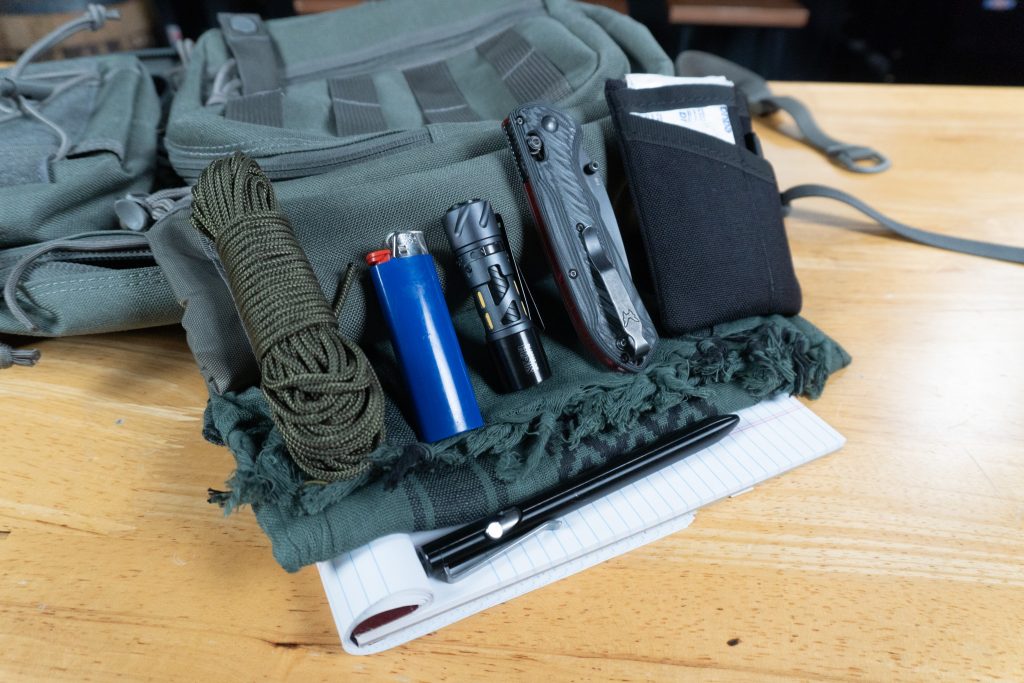
A knife is essential for preparing food, starting fires, carving stakes, building shelters, clearing paths, and more. Choose a robust 3.5 to 4-inch blade. A folder offers convenience and lighter weight, while a fixed blade brings strength and comfort.
A Bandana or Shemagh
Versatile, light, and affordable. Shade your head, filter water, store food, wipe messes, fan fires, etc.. Easy to make if you’re feeling cheap, and easy to carry.
Cordage
Paracord, bank line, twine, whatever you prefer. Use it to lash poles, build shelters, fix gear, or mark trails. Just store it neatly so it doesn’t become a mess.
Fire Starter
Fire is essential for cooking, signaling, lighting camp, sterilizing metal, and boosting morale. A fire starter weighs almost nothing but can save your trip. Bring a lighter, matches, or ferro rod.
Flashlight
Even the tamest of trails can be scary in the dark. A good flashlight with adjustable brightness and a reliable battery makes your trip safer and more enjoyable.
Water
You need water to live, so bring enough. Use a bottle, canteen, or hydration pack, but always carry a lightweight backup in case your main reservoir fails. If it pops and you don’t have a backup, you’re cooked.
If your trip outlasts your supply, pack a water filter. Stay hydrated, stay happy, stay alive.
Small First-Aid Kit
Handle minor injuries with a small kit: bandages, antiseptic ointment, painkillers, and alcohol pads.
Smartphone
It’s a navigation device, camera, emergency lifeline, and more. For longer trips, bring a backup battery. You’ll thank me.
Pen and Paper
Take notes, record turns, leave messages, preserve memories. A small pad and pen go a long way.
Mission-Specific Gear
You might notice this list isn’t long, but each item is truly useful in almost any adventure. Choose well and they’ll serve you for years.
"But George, you handsome devil," I hear you say. "What if I need to butcher a moose? stabilize an open facture? Climb a Grade 5 wall? That outdoor adventure kit won’t be enough! I’ll need more gear than that!"
You’re right. You will need more gear for those jobs. That’s what the rest of your pack is for. Everything here can fit in an admin pocket and weighs next to nothing. The rest of your space is for adventure-specific needs. Just apply the same principles when adding gear.
Let Principle Guide Your Choices
Say you’re going backpacking and plan to cook sausages over a fire. You’ll need to process wood. An axe is great, but remember: ounces equal pounds and pounds equal pain. Is there a lighter option? Bring a folding saw. Smaller, lighter, and it cuts logs easily.
Saws aren’t great for splitting wood, but with some skill, you can baton with your knife or carve wedges and use a rock to pound them in. Problem solved, no axe needed. Your back will thank you after ten miles on the trail.
When you’re building your pack for any adventure, do it with intention. Master the basic principles and you’ll know when and how to bend them. If you’re fishing, bring along that fish scaler that I made fun of earlier. If you’re logging deep in the woods, the axe might be worth its weight. Be thoughtful about what you pack, and you’ll never wonder, "Why did I bring this?" You’ll be glad you have it, and you won’t feel like anything’s missing.
Just don’t try to prepare for every possible scenario or you’ll end up with a 90-pound monster of a pack you don’t want to carry. And if you don’t want to carry it, you won’t. It’ll sit in the basement collecting dust while you gain weight on the couch. That’s not much of an adventure.
Gear Up for Adventure!
We talk so much about gear that sometimes we forget why we have it—to get outside. The outdoors is the real reward. You won’t find vast forests, rushing rivers, or majestic summits inside your backpack. But with your adventure kit on your back, you’ll find all the adventure you seek and more. Pack it well, and I’ll see you on the trail!