

The rumor mill has been churning for over a year now, but the cat is finally out of the bag: CPM MagnaMax, Dr. Larrin Thomas’s new steel, is here. With the help of our friends at Spyderco, I got my hands on a knife made of it to run it through its paces. In this article, I’ll talk about what it is, where it came from, and how it performs as a blade steel. Let’s jump in!
TL;DR: MagnaMax is an ultra-premium stainless blade steel optimized for edge retention, and is a great choice for EDC knives.
What Is MagnaMax?
CPM MagnaMax is a stainless powder steel designed for use in knives. It is optimized for superior edge retention with respectable marks in all other categories. It is relatively new, having been officially announced in May 2025, so there is not much publicly known about its composition and heat treatment. At the time of writing, very few knives with MagnaMax blades are on the market. Just be patient, you’ll be seeing them soon!
What MagnaMax is NOT
Though designed by the same metallurgist, MagnaMax is not a replacement for MagnaCut. MagnaCut is a "balanced steel," meaning it has a balance of toughness and edge retention. MagnaMax specializes in edge retention over toughness. Even in the age of MagnaMax, MagnaCut, and many other blade steels still have a place.
Where MagnaMax Came From
Much like in the case of MagnaCut, MagnaMax was cooked up by Dr. Larrin Thomas, the knife industry’s favorite metallurgist. It was made with the goal of combining the best elements of multiple blade steels. MagnaCut sought to combine the toughness of CPM 4V with the edge retention of CPM 20CV all while being stainless, and it worked. MagnaMax combines the edge retention and toughness of high-speed carbon steels like CPM 10V while still being stainless, and it works! That means you’ll retain a sharp edge darn near forever and won’t have to worry about moisture or the odd staple in cardboard. Very impressive!
But this makes me wonder – if Larrin started out with a groundbreaking balanced steel, and now releases a groundbreaking edge retention steel, is he working on a groundbreaking toughness steel to release next? I literally have no idea, but a man can dream!
How does MagnaMax perform?
The short answer is really well. Its edge retention was astounding, and it didn’t show weakness to anything I cut with it.
The knife I tested is the Spyderco Mule Team. The Mule Team Project is Spyderco’s in-house testing system for knives. Every time Spyderco gets their hands on a new steel, they run it on the Mule Team to figure out how it grinds, polishes, sharpens, lasers, handles a production run, and above all, performs on a knife. Much of what we know about blade steel we owe, at least in part, to Spyderco and the Mule Team. It’s also a big reason Spyderco knives are so dialed in materials and workmanship. It’s the perfect knife for testing a steel out. I told Eric Glesser, who runs Spyderco, that I was writing this article, and he was kind enough to send me one for testing. Thanks Eric!
Hardness
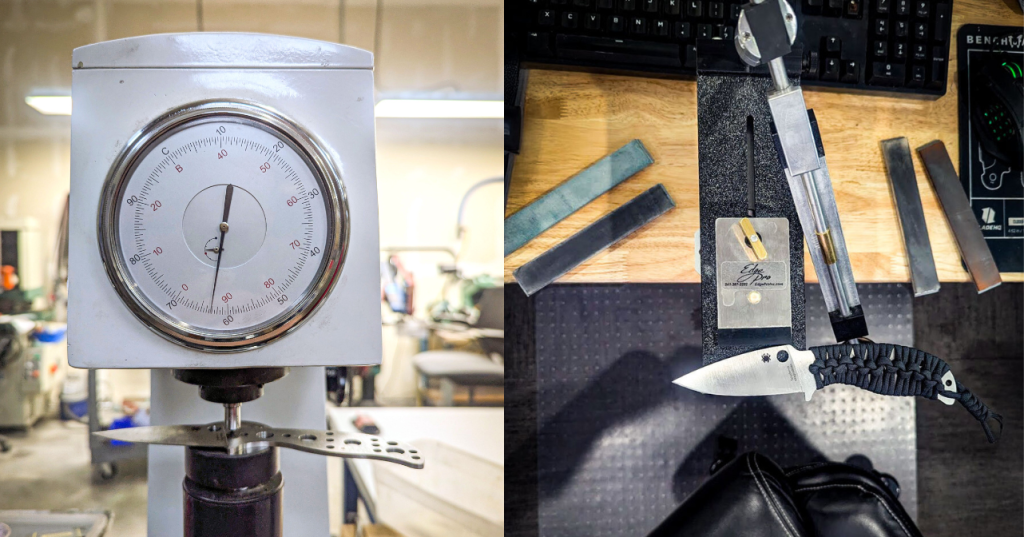
First, I measured the knife with a Rockwell Hardness tester. The steel clocked in just a hair over 63.5 HRC. That’s pretty hard for a blade steel. It’s definitely the hardest blade steel I’ve ever sharpened and used extensively. In theory, that increased hardness should translate to increased edge retention, right?
Edge Retention
Well, I tested it to find out. I sharpened this knife and a few others in different steels to the same angle and grit on my Edge Pro BevelTech, getting each within 50 g on a BESS tester. Then I ran them through two strips of coarse sandpaper, 20 strips of cardboard from the same box, and 20 pieces of twisted sisal rope on the same cutting board, doing my best to use the same portion of edge for all cuts. After that, I measured the sharpness again and crunched the numbers.
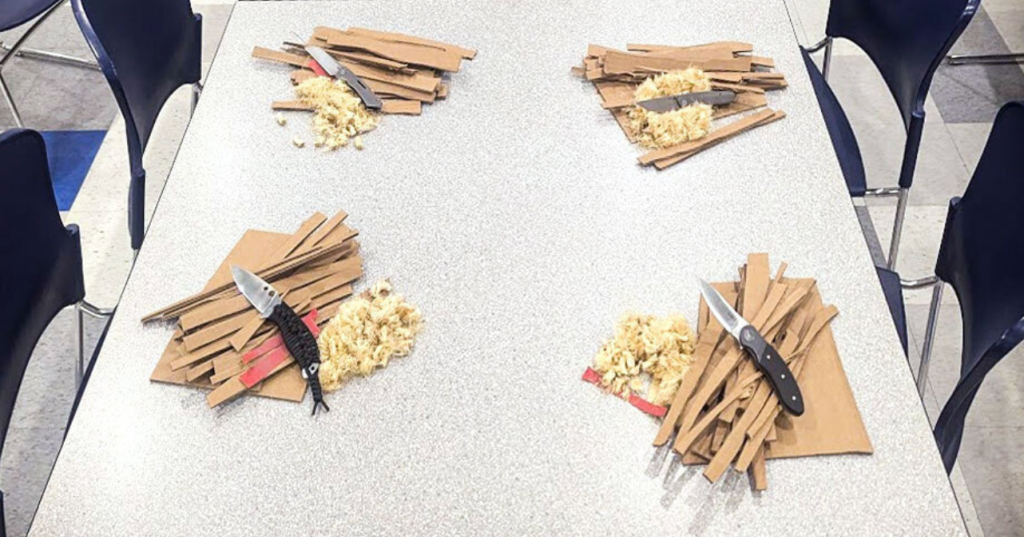
As you might imagine, the 8Cr13MoV was by far the dullest at the end, with a 240% increase in cut pressure (remember lower percentage = better retention). That steel is known for its toughness and affordability, but it’s not known for edge retention.
MagnaCut and 20CV both retained edges very well, increasing cut pressure by 60% and 96% respectively. These are both premium steels, and they held up pretty well to the extremely course media they were up against.
But MagnaMax really impressed me, increasing by only 29%, even after starting as the sharpest of the bunch.
If you want more information on the test, you’ll find it after the article under the "Nerd Stuff" heading.
Who is MagnaMax for?
After my testing, I am of the opinion that MagnaMax is the best blade steel ever made for EDC knives. Folders and small fixed blades are seldom subjected to the kind of work that asks a lot of toughness, but they do a lot of packaging and food cutting, and spend a lot of time in pockets. For my purposes, I’d prefer to have the edge retention than the titanic toughness for such a knife.
Reasons You Might Pick Another Steel
No steel is perfect, not even MagnaMax. If you’re after a camping or survival knife, or even a hard-use folder, MagnaMax might not have the toughness you’re after. For that I’d recommend its brother MagnaCut, or maybe even a tough carbon steel like Cru-Wear or M4.
Just making MagnaMax steel is expensive, and then its wear resistance makes grinding it hard as well. It’s likely that most MagnaMax knives will come with a premium price tag. If you’re looking to save some money, there’s a bunch of more affordable knives with S30V, M390, and S90V blades out there, although they won’t provide quite the same performance as MagnaMax.
Lastly, if you like sharpening with whetstones, MagnaMax might cause you some grief. Because it’s so hard and resistant to wear, softer stones can take ages to sharpen it. But if you use diamonds, you’ll be golden.
Conclusion – Is MagnaMax the next big thing?
MagnaMax is a really cool steel. Yes, there are plenty of steels out there with similar or greater edge retention, but most of them are either extremely brittle or susceptible to rust. MagnaMax solves all of that, which makes it a great choice for a folder or a small fixed blade. I anticipate MagnaMax will become a staple blade steel for years to come.
Nerd Stuff
If you want to see hard numbers and the like, you’ll find below.
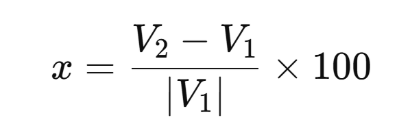
I calculated the edge degradation percentage using a simple percentage change formula. For this equation, V1 is the beginning sharpness and V2 is the end sharpness, and x is the percentage of increase. I rounded results to the nearest whole number.
CRKT Hootenanny – 8Cr13MoV
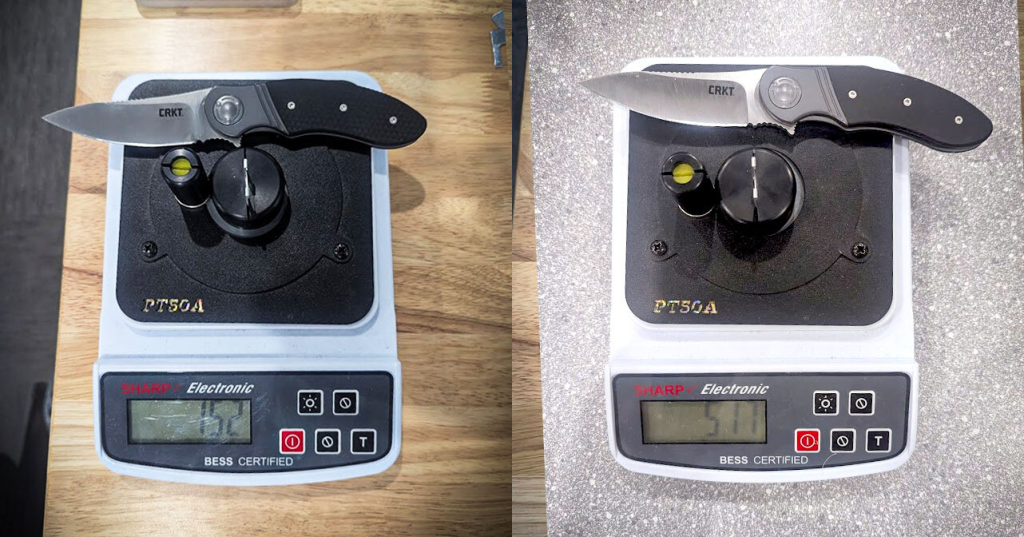
- V1: 152 g
- V2: 517 g
- x: 240%
WE Knife Co. Mini Buster – CPM 20CV
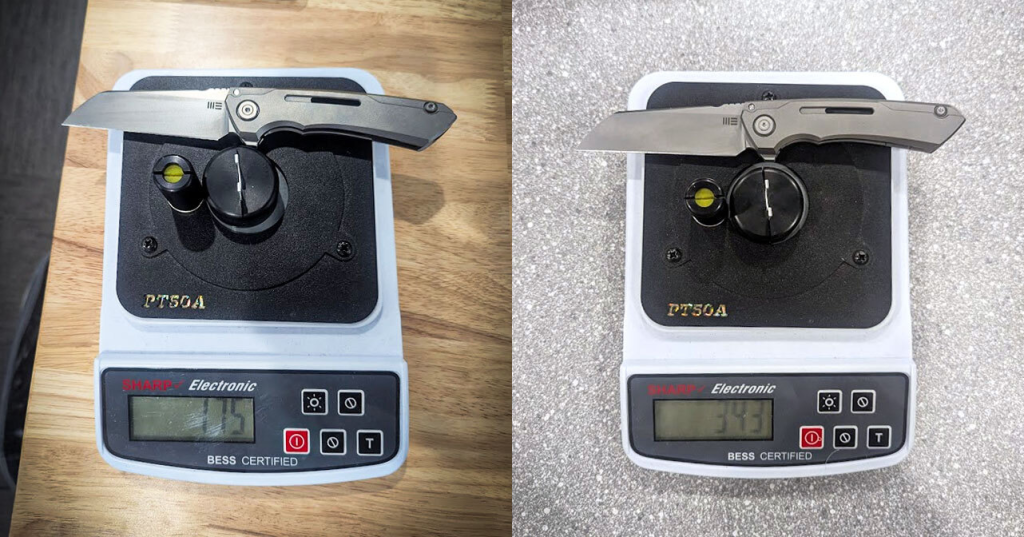
- V1: 175 g
- V2: 343 g
- x: 96%
Bestech VK-KUZE – CPM MagnaCut
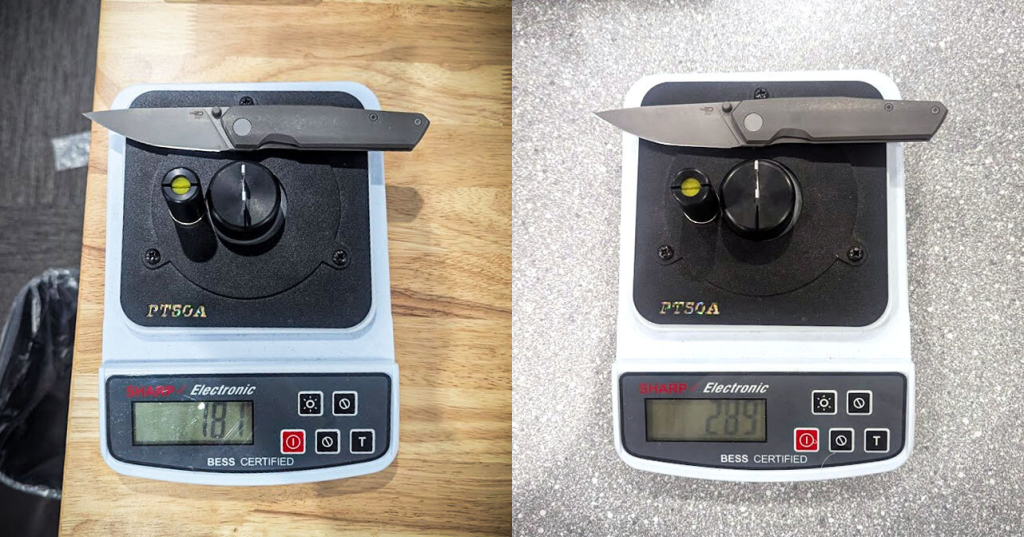
- V1: 181 g
- V2: 289 g
- x: 60%
Spyderco Mule Team – CPM MagnaMax
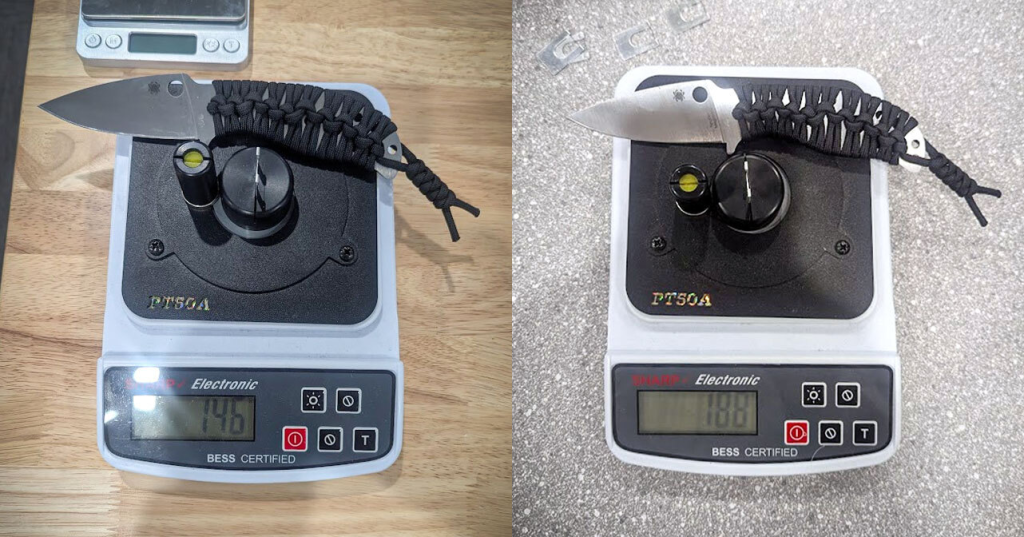
- V1: 146 g
- V2: 188 g
- x: 29%
At this point, I can hear the angry comments about how unscientific this is. I know my test doesn’t account for tons of variables (edge geometry, curvature, pressure, sawing, handle angles, variations in V1 values, etc.). Despite doing my best, neither I, the knives, nor the media were lab-grade, so don’t treat this as rigorous science. I used my hands, random stuff from around the office, 7th-grade math, and a measuring device that can be cheesed. The test isn’t perfect and doesn’t claim to be, but I definitely learned from it!
But if you, like me, would like to see more data, it’s just a matter of time before Larrin puts out all the beautiful charts that show how it compares in a laboratory setting against many more blade steels. Just be patient, follow KnifeSteelNerds.com, and we’ll know soon enough!